Garage Door Opener Repair vs Replacement: How to Decide
Garage Door Opener Repair vs Replacement: How to Decide
When a garage door opener starts acting up, most homeowners want a simple answer: should it be repaired, or is it time to replace it? The problem is that the right choice depends on more than whether the opener still turns on. A noisy motor, an unreliable remote, a door that reverses unexpectedly, or an opener that strains during travel can all point to very different causes.
In some homes, the issue is limited and repair makes perfect sense. A bad remote, worn gear, sensor problem, or isolated electrical issue may be fixable without replacing the full system. In other homes, the opener is already old enough, inconsistent enough, or outdated enough that another repair only delays the bigger decision.
That is why this topic matters. A garage door opener is connected to the full door system, not just the motor unit on the ceiling. If the springs are out of balance, the rollers are dragging, or the tracks are creating extra resistance, the opener may look like the problem even when it is only reacting to stress from somewhere else. In those cases, a proper garage door repair service in Sherman Oaks should help determine whether the opener itself is failing or whether the larger system is pushing it beyond what it should handle.
Short Answer: When Repair Makes Sense and When Replacement Is Smarter
In general, repair makes more sense when the problem is specific, the opener is still in reasonable condition, and the system has not been giving repeated trouble. If the issue is limited to something like sensor alignment, a remote or keypad problem, a worn gear, a travel-setting issue, or another isolated component failure, repairing the opener is often the more practical move.
Replacement usually makes more sense when the opener is older, parts are getting harder to find, safety features are outdated, or the system has started having recurring problems. If the opener has become unreliable, struggles regularly, or needs one repair after another, the real cost is no longer just the next fix. It becomes the ongoing time, money, and frustration of trying to keep an aging unit going.
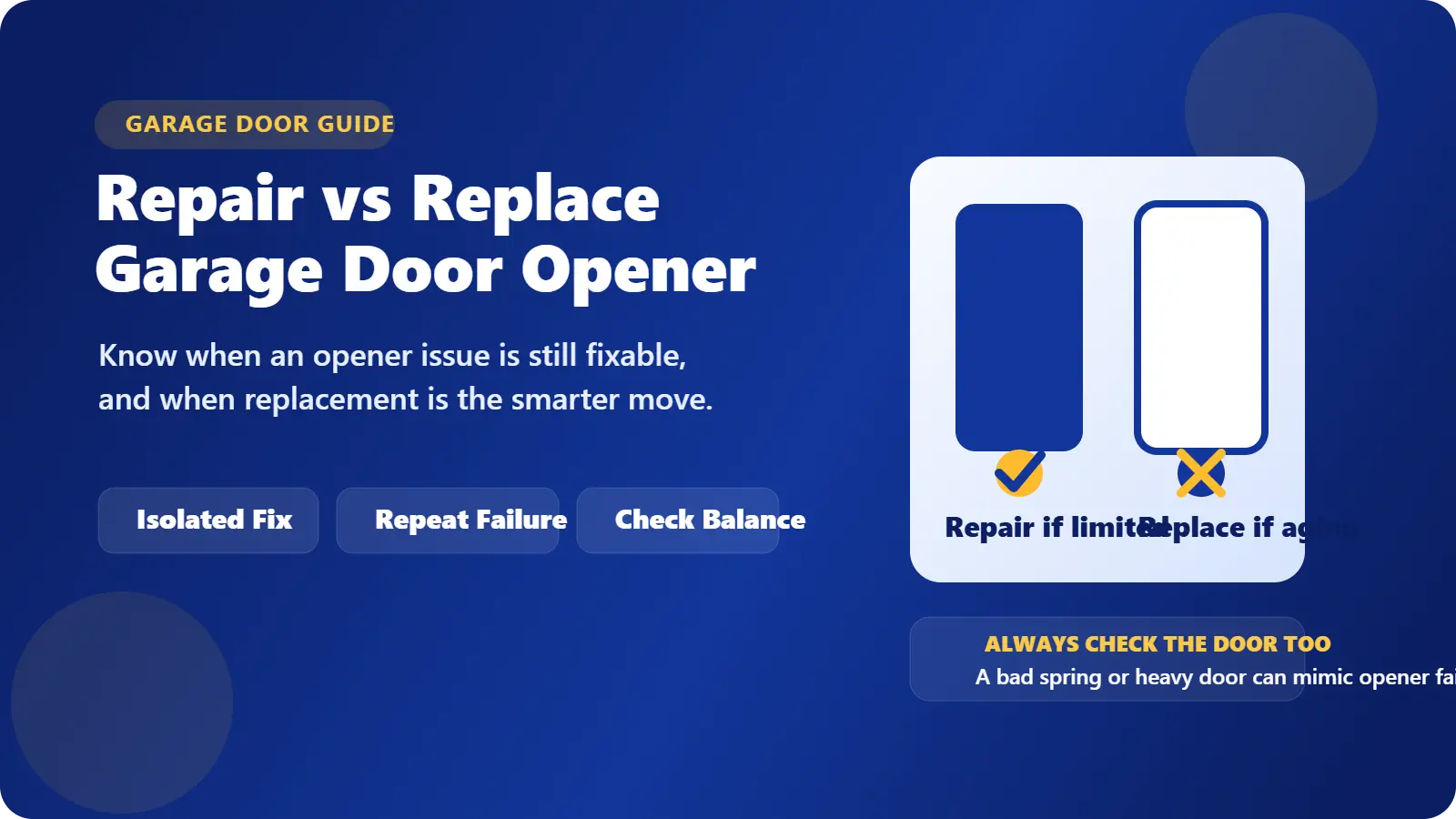
The practical decision comes down to three things. First, what exactly is failing. Second, how old and dependable the opener is overall. Third, whether the problem is really inside the opener or coming from the garage door system around it. A repair is often the right answer when the issue is contained. A replacement is often the smarter answer when the problem is broader, repeated, or tied to an opener that is already near the end of its useful life.
Problems That Are Often Still Repairable
Not every opener problem means the whole system needs to be replaced. In many homes, the opener itself is still usable and the issue comes down to one part, one setting, or one accessory that is no longer working correctly. That is why a good diagnosis matters before anyone jumps straight to replacement.
One of the most common examples is a control issue. If the wall button works but the remote does not, or the keypad works only part of the time, the problem may have nothing to do with the motor unit itself. It may be a battery issue, signal issue, wiring issue, or a separate control component that can be repaired or replaced without changing the full opener. In some cases, the right fix may be closer to garage door remote and keypad repair than full opener replacement.
Sensor-related issues are also often repairable. If the door reverses unexpectedly, refuses to close, or behaves inconsistently at the bottom of travel, the cause may be misaligned photo-eyes, dirty lenses, loose wiring, or another safety-system issue. Those problems still matter, but they do not automatically mean the full opener is finished.
Some mechanical and electrical issues can also stay in the repair category. Depending on the opener model and age, worn gears, drive components, logic board issues, limit-setting problems, or isolated motor-related problems may still be worth fixing. That is especially true when the opener is otherwise in decent condition, the parts are still available, and the system has not been causing repeated trouble. In many cases, a focused garage door opener repair visit is still the right first step.
Repair usually makes the most sense when:
- the opener is still reasonably dependable overall
- the issue is clearly identified
- the repair cost stays proportionate
- the unit still meets current safety expectations
- replacement is not being forced by age, discontinued parts, or repeat failures
Problems That More Often Point to Replacement
Some opener issues are not just one-off problems. They are warning signs that the system is getting too old, too unreliable, or too limited to justify continued repair. In those cases, replacement often becomes the smarter long-term decision.
One major sign is repeated failure. If the opener has already needed multiple repairs, or if one issue keeps turning into another, the problem is no longer just the current part that stopped working. It is the overall reliability of the unit. At a certain point, paying for another repair stops being cost-effective because the opener has already entered a pattern of decline.
Age matters too. An older opener may still function, but that does not always mean it is the right candidate for more repair work. If the unit lacks modern safety standards, struggles with normal operation, or no longer has dependable part support, replacement usually makes more sense than trying to stretch its life further.
Replacement also becomes more reasonable when:
- parts are discontinued or difficult to source
- the opener is inconsistent even after prior repair
- the motor is clearly weakening
- the drive system is badly worn
- the unit no longer fits the homeowner’s needs
- the homeowner already wants quieter operation, better controls, or a cleaner upgrade path
This is especially true when the current unit no longer matches the garage well. For example, a homeowner with an attached garage may keep repairing an aging noisy opener when the better long-term move is to replace it with something that better fits the space, such as a quieter belt-drive system or another more suitable modern setup.
Why Age and Parts Availability Matter
A garage door opener can still function and still be a poor candidate for repair. That is where age and parts availability become important. The question is not only whether the opener can be fixed. It is whether fixing it still makes practical sense.
As openers get older, several things start working against repair. Replacement parts may become harder to find. Some parts may still exist, but not at a reasonable cost. In other cases, the opener may technically be repairable, but the homeowner is putting money into a system that is already close to the end of its service life. That is usually the point where repair stops being a smart long-term answer.
Safety also matters here. Older openers may still run, but they may lack the same level of safety response, control options, and reliability homeowners expect from current systems. If the opener is old enough that the homeowner is already dealing with inconsistent behavior, part scarcity, or repeated service calls, replacement often becomes the cleaner decision.
This is why age should not be treated as just a number. It matters because it affects repair value, part support, and the odds that another issue is coming soon after the current one.
When the Door May Be the Real Problem, Not the Opener
This is one of the most important parts of the decision. Many homeowners assume the opener is failing because that is the part they see and hear. But in some cases, the opener is only reacting to a garage door system that is creating too much strain.
If the springs are losing balance, the rollers are dragging, the tracks are misaligned, or the hinges are worn, the opener has to work harder every time the door moves. That added stress can make the opener sound rough, move slowly, hesitate, or seem unreliable even when the root issue is somewhere else in the system.
That is why an opener decision should never be made in isolation. A door that is too heavy, out of balance, or running with extra friction can make a good opener look bad. In those situations, the smarter step may be fixing the actual door problem first, not replacing the opener immediately.
This is also where homeowners can misread a motor problem. A unit that sounds strained is not always failing internally. It may be trying to compensate for a door system that no longer moves the way it should. That is one reason a proper inspection matters before deciding between opener repair and replacement.
Should You Replace the Opener If You Are Already Repairing the Door?
Sometimes yes, but not automatically. If the garage door is already being repaired, that can be a good time to step back and look at the opener too. But the right answer still depends on the age and condition of the opener, not just the fact that other work is happening on the door.
If the opener is still dependable, the safety features are functioning properly, and the current problem has clearly come from the door itself, there may be no reason to replace the opener at the same time. A door repair does not automatically mean the motor unit above it is near the end.
On the other hand, if the opener is already old, noisy, inconsistent, or poorly matched to the garage, the timing can make replacement more practical. A homeowner who is already repairing springs, rollers, or track issues may not want to pay for one repair now and then face an opener replacement shortly after. In that situation, doing both decisions together may create a cleaner long-term result.
This is also where upgrade goals matter. If the homeowner already wants quieter operation, better controls, improved reliability, or a different opener style, the repair visit may be the right moment to move toward a full garage door opener replacement instead of keeping an aging unit in place.
When a New Opener Is Worth the Upgrade
A new opener is worth the upgrade when it solves more than just the current failure. If replacement gives the homeowner better reliability, quieter operation, better safety response, more suitable controls, or a better fit for the garage layout, then it can be worth far more than simply getting the old unit to work one more time.
This matters most when the homeowner is already frustrated with how the current opener behaves. The unit may still function, but it may be loud, inconsistent, outdated, or simply no longer the right fit for the home. At that point, replacement is not only about fixing a breakdown. It is about improving how the system works every day.
For some homes, that may mean moving to a quieter belt-drive system. For others, it may mean choosing an opener type that better fits the layout and daily use of the garage. If someone is already comparing options, a guide like the belt drive vs chain drive garage door opener guide can help clarify what kind of upgrade actually makes sense.
A new opener is usually the better upgrade decision when:
- the current unit is unreliable
- repair costs are starting to stack up
- the homeowner wants quieter or smoother operation
- the current opener lacks useful modern features
- the replacement will better match the garage and the way the home is used
FAQ About Garage Door Opener Repair vs Replacement
Is it better to repair or replace a garage door opener?
It depends on the problem, the age of the opener, and the overall condition of the system. Repair is often the better choice when the issue is isolated and the opener is still dependable. Replacement is often the better choice when the unit is older, unreliable, or no longer worth continued repair.
How do I know if my garage door motor is going bad?
Common signs include straining noise, slower response, inconsistent movement, failure under normal load, or repeated operating problems that are not explained by remotes, sensors, or settings alone. But a strained opener is not always a bad motor. In some cases, the garage door itself is creating the extra resistance.
Can a garage door opener be repaired instead of replaced?
Yes, many can. Sensor issues, control issues, drive-part wear, wiring problems, and some logic or motor-related issues may still be repairable, depending on the opener model and parts availability.
When is replacement the smarter long-term choice?
Replacement usually makes more sense when the opener is older, has repeated issues, lacks modern safety standards, or is no longer a good fit for the garage. It also makes more sense when parts are discontinued or repair costs are getting too close to replacement value.
Should I repair the opener if the garage door itself has problems too?
Not without checking the full system first. If the springs, rollers, tracks, or balance are the real issue, repairing the opener alone may not solve the main problem. The full door system should be evaluated before choosing repair or replacement.
Bottom Line
Garage door opener repair makes sense when the problem is limited, the opener is still dependable, and the repair has real value. Replacement makes more sense when the system is older, unreliable, hard to support with parts, or no longer the right fit for the home.
The most important part of the decision is knowing what is actually failing. Some issues come from the opener itself. Others come from the garage door system putting too much strain on it. That is why the smartest choice is not just fixing the loudest symptom. It is understanding whether the opener still deserves repair or whether replacement will create a better long-term result.
Need Help Deciding Between Opener Repair And Replacement In Sherman Oaks?
If your opener is acting up, we can check whether the problem is isolated and repairable or whether replacement will give you a cleaner long-term result for the way your garage door is actually being used.