Garage Door Panel Repair vs Replacement: When Does Replacement Make Sense?
When a garage door panel gets dented, cracked, bent, or otherwise damaged, most homeowners ask the same basic question: can this one section be repaired, or does it need to be replaced? The answer depends on more than how bad the damage looks from a few feet away. Some panel problems are mostly cosmetic. Others affect how the garage door moves, seals, lines up, and holds its shape under daily use.
That is why panel damage is not only an appearance issue. A garage door is made of connected sections that work together. If one panel is bent badly enough, the hinges, rollers, track movement, and overall alignment can start feeling the effect. In other cases, the visible damage may look ugly but still not interfere much with operation. The decision has to account for both function and appearance.
For homeowners in Sherman Oaks, this usually becomes a real decision when the damage comes from a vehicle bump, repeated wear, rust, or impact to one section of the door. At that point, a proper garage door repair service in Sherman Oaks should help determine whether the issue is limited to one panel, whether the door is still structurally sound, and whether panel replacement makes more sense than trying to live with the damage or patch it temporarily.
Short Answer: When One Damaged Panel Can Still Be Addressed and When Replacement Is Smarter
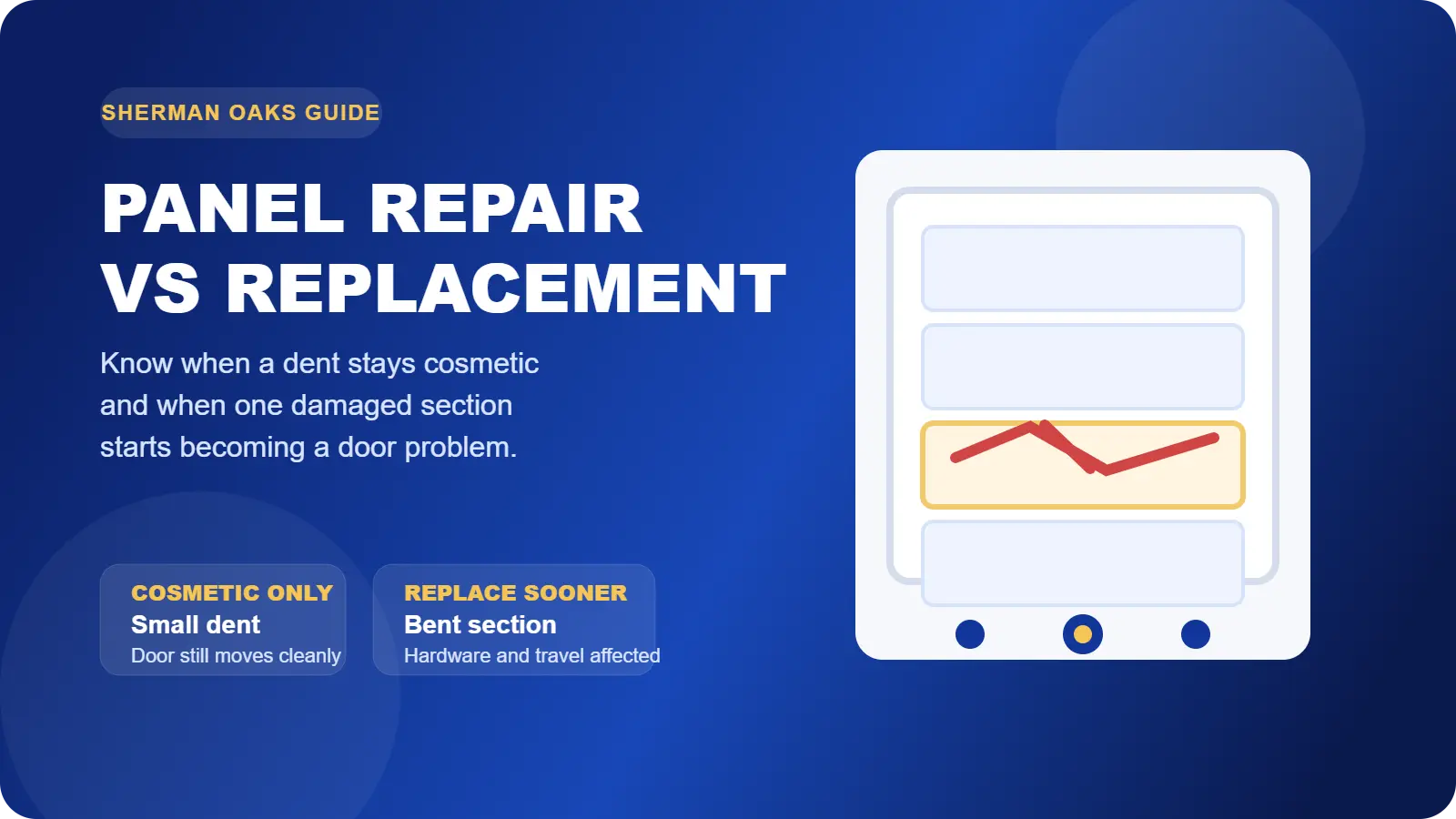
In general, a damaged garage door panel can sometimes be addressed without a full replacement decision when the issue is limited, mostly cosmetic, and not affecting how the door moves or closes. Small dents, light surface damage, or minor visual wear may not always justify replacing the section right away, especially if the rest of the door is still operating normally.
Replacement becomes the smarter choice when the panel damage changes the shape, stability, or movement of the door. If a panel is cracked, bent out of form, separating at the joints, affecting the hinges, or making the door travel unevenly, the issue is no longer just visual. At that point, replacing the damaged section is usually the safer and more practical move.
The real decision usually comes down to four things. First, how severe the damage is. Second, whether the damage is cosmetic or structural. Third, whether a matching panel is realistically available. Fourth, whether the rest of the door is still in good enough condition to make one-panel replacement worthwhile.
Types of Garage Door Panel Damage
Not all panel damage means the same thing. Some problems are mostly visual and may not change how the garage door works right away. Other problems affect the strength, alignment, or travel of the door and need to be treated more seriously. That is why the first step is to understand what kind of damage is actually there.
One common type is light cosmetic denting. This usually happens when a vehicle bumps the door, a ball hits one section, or the panel takes a small impact without changing the overall shape too badly. In cases like that, the door may still open and close normally even though the section looks clearly damaged.
A more serious type is structural distortion. This happens when the panel is bent deeply, creased, cracked, split, or pushed far enough out of form that it no longer sits correctly with the surrounding sections. Once that happens, the issue is no longer just about appearance. The damaged panel can affect how the hinges connect, how the rollers track, and how evenly the full door moves.
There is also age-related panel damage. Rust, corrosion, warping, rot, finish breakdown, and weakened section edges can develop over time, especially on older doors. That kind of damage may look gradual instead of dramatic, but it can still lead to sealing problems, stiffness, or structural weakness if it keeps getting worse.
Cosmetic Dents and Surface Damage
Small dents, chipped paint, light rust, or other limited surface damage often fall into the cosmetic category. These issues matter for appearance, but they do not always mean the panel is failing mechanically. If the section still holds its shape and the door is moving normally, the damage may not need immediate replacement.
Bent, Cracked, or Warped Panels
A bent, cracked, or warped panel is different. Once the section is no longer holding its intended shape, the full door can start moving under uneven stress. That is usually the point where panel replacement becomes a much more serious consideration.
Damage Around Hinges or Section Joints
Damage near hinge points, panel seams, or where the sections connect is especially important. Those areas carry movement and load. If the panel is damaged where the hardware attaches, the problem can spread into alignment, noisy travel, or section instability.
When Cosmetic Damage May Not Need Immediate Replacement
Not every damaged panel needs to be replaced the moment a dent appears. In some cases, the damage is mostly visual and the garage door is still operating normally. That does not mean the problem should be ignored forever, but it does mean the homeowner may have time to think about the decision instead of treating it like an urgent structural failure.
This is most often true when the panel has a small dent, minor surface wear, or limited finish damage that does not change the shape of the section enough to affect how the door opens, closes, seals, or lines up. If the rest of the door is in good condition and the damaged section is not pulling on the hinges, rollers, or nearby panels, immediate replacement may not be necessary.
That said, cosmetic damage still deserves a closer look. What appears minor from the driveway may hide deeper distortion once the door moves. If the section is subtly bowed, if the panel edge is beginning to separate, or if the dent is near hardware attachment points, the damage may be more than cosmetic even if it does not look severe at first glance.
When Appearance Is the Main Issue
If the main concern is visual and the door still runs smoothly, the homeowner may decide to wait and monitor the panel rather than rush into replacement. That is often the case with smaller dents on newer steel doors where the structure of the section is still intact.
When a Cosmetic Problem Starts Becoming More Than Cosmetic
Cosmetic damage stops being only cosmetic when it begins affecting:
- panel fit
- weather sealing
- hinge stability
- track movement
- the way the section lines up with the rest of the door
That is the point where a damaged section should be judged less by how it looks and more by what it is doing to the system.
When Panel Replacement Is The Safer Call
Panel replacement becomes the safer decision when the damage is no longer limited to appearance and starts affecting how the garage door functions. A section that is cracked, deeply bent, separating at the seams, or no longer holding proper shape can create more than a visual problem. It can change how the full door moves and how stress is distributed across the rest of the system.
That matters because the garage door sections do not work independently. If one panel is distorted badly enough, the hinges may no longer sit correctly, the rollers may travel under extra strain, and the surrounding sections may begin compensating for a shape they were not designed to support. Once that starts happening, a damaged panel becomes a system problem, not just a cosmetic defect.
Panel replacement is usually the safer call when:
- the panel is cracked or split
- the section is bent out of shape
- the damage is affecting hinge mounting points
- the panel is interfering with smooth travel
- the section no longer seals properly
- the damage is spreading into nearby hardware or adjoining panels
At that point, trying to treat the issue as minor usually stops making sense. The question is no longer whether the panel looks bad. It is whether the damaged section is still doing its job safely and correctly.
Damage That Affects Door Movement
If the panel is making the door bind, shake, run unevenly, or sound different in one part of travel, replacement becomes much easier to justify. A garage door that no longer moves evenly should not be judged only by appearance.
Damage That Affects Stability or Hardware Support
When a panel is damaged where the hinges, brackets, or section joints carry load, the safer move is usually replacement. These are not low-stress cosmetic areas. If the panel can no longer support the hardware correctly, the rest of the door starts carrying that weakness.
Why Matching Older Panels Can Be Hard
One of the biggest reasons homeowners end up replacing a panel instead of trying to solve the issue some other way is simple: matching. A garage door may technically allow one-panel replacement, but that does not always mean a matching section is easy to find.
The challenge usually comes from age, manufacturer changes, finish fading, and discontinued panel profiles. Even if the door brand is known, the exact section style may no longer be in production. In other cases, a replacement panel may still exist, but the color, texture, embossing, window design, or surface finish may no longer line up cleanly with the rest of the door.
That is especially true with older doors. Sun exposure, repainting, material aging, and product-line changes can all make a new section stand out. So even when one damaged panel is the only section that clearly needs replacement, the homeowner may still end up comparing the value of a mismatched repair result against a broader door upgrade.
Manufacturer Availability Matters
If the exact panel profile is still supported by the manufacturer, a one-panel replacement is much easier to justify. If the section is discontinued or no longer easy to source, the repair decision changes quickly.
Visual Match vs Functional Match
A replacement panel may fit mechanically and still not match visually. That distinction matters. Some homeowners care mainly about restoring safe function. Others do not want one new section standing out sharply against the rest of the door. Both concerns are valid, and they both affect the decision.
When One Damaged Panel Starts Affecting The Rest Of The Door
A single damaged panel does not always stay a single-panel problem. Once the section loses its shape or stability, the rest of the garage door may start compensating for it. That can show up as rough travel, extra noise, misalignment between sections, hinge strain, or a door that no longer closes as evenly as it should.
This is one reason homeowners should be careful about minimizing panel damage just because the door still moves. A door can still open and close while the damaged section is putting extra stress on the rollers, hinges, track alignment, or opener. The system may keep operating for a while, but it may not be operating well.
The risk grows when the damaged panel is near key hardware connection points or when the section is badly bent. The panel no longer guides force the way it should, and that can create wear in nearby components. In some cases, what begins as one visibly damaged section becomes a broader reliability issue because the rest of the system is being asked to work around it.
That is why a panel decision should not be based only on the panel itself. It should also consider what the damage is doing to the surrounding door sections and moving parts. If there is any doubt about whether the issue is still isolated, a proper garage door inspection is the cleaner next step.
Should You Replace One Panel Or Think About A Bigger Upgrade?
This is where the decision often becomes less about one damaged section and more about the overall value of the door. If the rest of the garage door is in strong condition, the section matches well enough, and only one panel is truly affected, replacing that panel can still be a practical solution.
But if the door is older, several sections are worn, the finish is fading badly, matching is unrealistic, or the damage is part of a broader decline in the system, the homeowner may need to think beyond one-panel replacement. At that point, the smarter question is not only whether this panel can be replaced. It is also whether this door is still worth piecemeal fixes.
That does not mean the article should jump straight to full replacement every time. It means homeowners should weigh:
- age of the door
- condition of the other panels
- availability of a matching replacement section
- visible wear elsewhere on the system
- whether the result will still make sense visually and mechanically
This is also where a replacement-focused service path becomes relevant. If the section is clearly beyond a cosmetic issue and the best next step is changing out the damaged piece, the natural service page to support is garage door panel replacement.
If you want a clearer idea of what a technician is reviewing before calling the damage isolated or broader, this 25-point garage door inspection checklist helps show what gets checked around movement, hardware, and overall door condition.
FAQ About Garage Door Panel Repair vs Replacement
Can one garage door panel be replaced without replacing the whole door?
Yes, sometimes. If the damage is limited to one section, the rest of the door is still in good condition, and a matching panel is available, one-panel replacement can be a practical solution. The decision gets harder when the door is older, the profile is discontinued, or the damage has already started affecting nearby sections.
How do I know if a panel is only cosmetic or structurally damaged?
A cosmetic issue usually affects appearance more than function. Small dents, chipped paint, or light surface wear may not change how the door moves. Structural damage is more serious. Cracks, deep bends, warped sections, separation at the seams, or damage near hinges and hardware usually point to a panel that is no longer supporting the door correctly.
Will a replacement panel match the rest of the door?
Not always. That depends on the age of the door, the manufacturer, the exact panel profile, and how much the existing finish has faded over time. A panel can still fit mechanically and look noticeably different from the rest of the door.
Is it worth replacing one panel on an older garage door?
Sometimes, but only if the rest of the door is still worth keeping. If the other panels are worn, the finish is fading badly, or the exact section is hard to match, one-panel replacement may be less appealing. In that case, the homeowner may need to compare the value of fixing one section against a broader upgrade decision.
Can I keep using the garage door if one panel is bent?
That depends on how much the bend is affecting movement and stability. If the section is only lightly dented and the door still moves normally, it may not be urgent. If the panel is distorted enough to affect alignment, hinge support, sealing, or smooth travel, continued use can put extra stress on the rest of the system.
Bottom Line
Garage door panel damage should be judged by more than appearance. A small cosmetic dent may not need immediate replacement if the section is still holding shape and the door is operating normally. But once the panel is bent, cracked, warped, separating, or affecting hardware support, replacement usually becomes the smarter and safer call.
The harder part of the decision is often not the damage alone. It is whether the rest of the door is still worth building around. If the door is older, matching is difficult, or other sections are already showing wear, the conversation may start moving beyond one damaged panel and toward a bigger replacement decision.
That is why the best answer is not just repair or replace. It is deciding whether the panel damage is still isolated, whether a clean match is realistic, and whether the rest of the door still makes one-panel replacement worth doing.
Need Help Deciding If A Damaged Garage Door Panel Should Be Replaced?
If one section of your door has been dented, bent, or cracked, we can check whether the damage is still isolated, whether the rest of the system is being affected, and whether panel replacement is the cleanest next step.